
Automotive Capacitors
Overview
Technical Advantages
AEC-Q200 qualification for automotive reliability
Extended temperature range to 150°C
Vibration resistance per automotive standards
Long operational life in harsh conditions
EMC performance for sensitive electronics
Automotive Capacitor Applications
Modern vehicles contain thousands of capacitors supporting everything from engine management to advanced driver assistance systems. Automotive capacitors must meet stringent reliability requirements specified by the Automotive Electronics Council (AEC). #
AEC-Q200 Qualification
AEC-Q200 is the automotive industry standard for passive component qualification. This specification defines testing requirements including: - Temperature cycling from -55°C to +150°C - Humidity resistance (85°C/85% RH) - Mechanical shock and vibration - Life testing at maximum rated conditions At Specap, we stock AEC-Q200 qualified capacitors from leading automotive-grade manufacturers to ensure your designs meet industry reliability requirements. #
Engine Control and Powertrain
Engine control units (ECUs) and transmission controllers operate in the harshest areas of the vehicle, often near the engine block where temperatures can exceed 125°C. These applications require: - **High-Temperature MLCC**: Ceramic capacitors rated for 150°C or higher, using C0G/NP0 or X8R dielectrics for stable performance across the temperature range. [TDK](/tdk-capacitors) and [Vishay](/vishay-capacitors) are leading suppliers of automotive MLCC. - **Aluminum Polymer Capacitors**: Low ESR capacitors for microprocessor decoupling with excellent high-temperature performance. - **Throttle Body & Fuel Injection**: Film capacitors in direct-injection control modules must handle high-voltage pulses while withstanding engine bay heat and vibration. #
Electric and Hybrid Vehicles
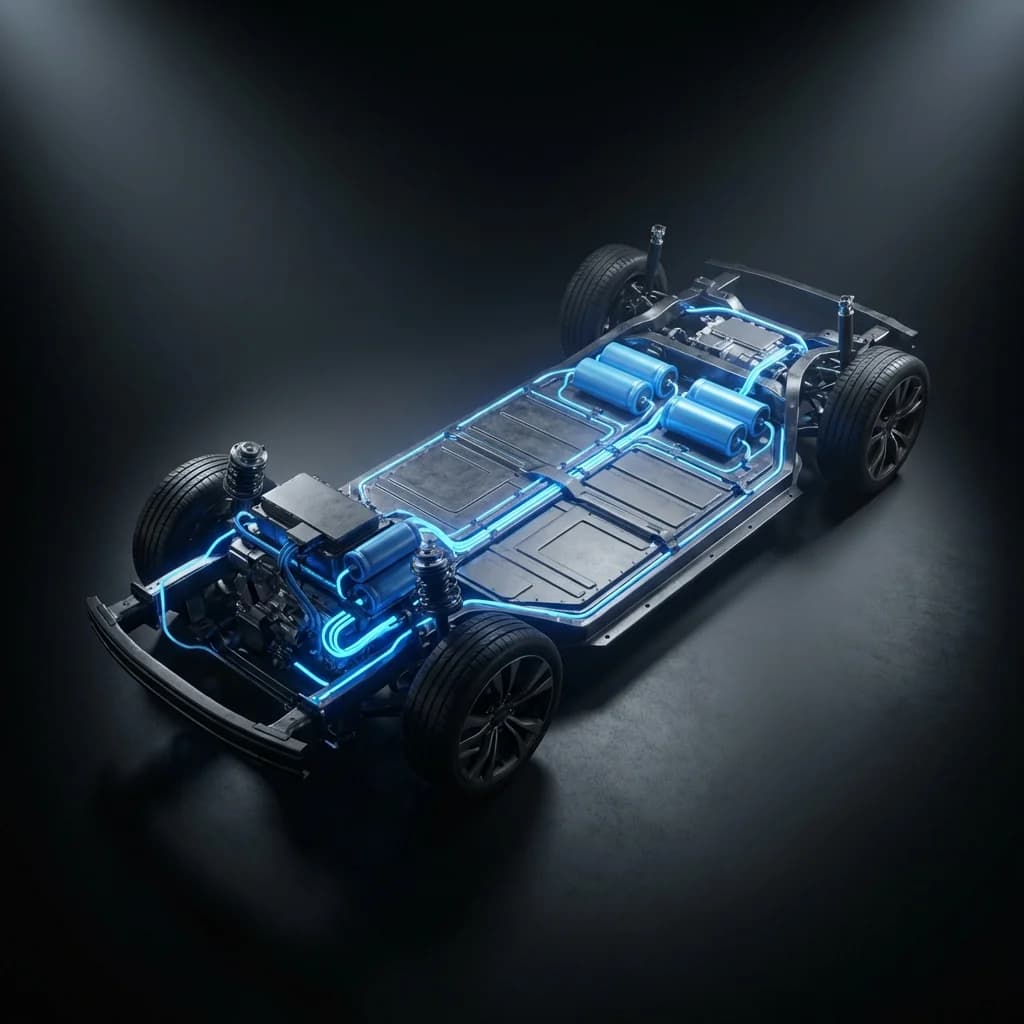
The transition to electric mobility creates new demands for capacitors: - **DC Link Capacitors**: Large [film capacitors](/capacitors/film) in the traction inverter smooth the DC bus (typically 400V or 800V) and handle regenerative braking energy. These must withstand high ripple currents and operate reliably for the vehicle's 15+ year lifetime. Leading EV DC link suppliers include [EPCOS/TDK](/epcos-capacitors), [Vishay](/vishay-capacitors), and KEMET. - **On-Board Charger (OBC) Capacitors**: Power factor correction and filtering capacitors in Level 2 (7-22kW) and DC fast charging circuits must meet safety standards while handling high power levels. X and Y safety capacitors are required at the AC input for EMC compliance. - **Battery Management Systems**: Precise filtering and timing capacitors ensure accurate cell voltage monitoring and balancing. Low-leakage C0G MLCC capacitors are preferred for analog front-end circuits. - **48V Mild Hybrid Systems**: The growing adoption of 48V architecture in conventional vehicles requires DC link capacitors rated for 48-60V, typically aluminum polymer or small film types, for the belt-integrated starter generator (BSG) inverter. #
EV Charging Infrastructure
Beyond the vehicle itself, EV charging stations rely heavily on capacitors: - **DC Fast Charger Power Stages**: 50-350kW DC chargers use high-voltage film capacitors (up to 1000V DC) in the rectifier and converter stages. Long life and high ripple current are essential for stations operating 12-18 hours per day. - **AC Charging Stations**: Level 2 EVSE units use [EMI filter capacitors](/resources/blog/emi-emc-filter-capacitor-selection-guide) for conducted emissions compliance and PFC capacitors for power factor correction. - **Energy Buffer Systems**: Some charging stations incorporate supercapacitor or large film capacitor banks to reduce peak demand on the grid during fast charging events. #
Capacitor Technologies for Automotive Applications
Different automotive subsystems demand different capacitor technologies: - **MLCC (Ceramic)** — Dominant for decoupling, filtering, and timing on ECU circuit boards. Automotive-grade X8R and X8L dielectrics extend operating temperature to 150°C. Watch for [DC bias derating](/resources/guides/capacitor-derating) — a 10µF X7R at rated voltage may deliver only 2-3µF effective capacitance. - **Film (Polypropylene/Polyester)** — Essential for DC link, snubber, and EMI filter applications. Self-healing property provides a safety margin against dielectric defects. See our [film capacitor selection guide](/resources/guides/film-capacitor-selection). - **Aluminum Polymer** — Bridging the gap between electrolytics and ceramics with low ESR, stable capacitance, and no dry-out failure mode. Increasingly used for power supply output filtering in automotive modules. - **Wet Aluminum Electrolytic** — Still used in some DC link and energy storage roles where maximum capacitance per volume is required, though film capacitors are displacing them in new EV designs due to superior lifetime. #
Infotainment and Connectivity
In-vehicle entertainment, navigation, and connectivity systems require capacitors similar to consumer electronics but with automotive-grade reliability: - Low ESR capacitors for power supply filtering in head units and amplifiers - Audio-grade film capacitors for premium sound systems — [Sprague](/sprague-capacitors) film types are prized in high-end automotive audio - RF capacitors for antenna matching and filtering in V2X (vehicle-to-everything) communication modules #
ADAS and Safety Systems
Advanced driver assistance systems including cameras, radar, and LiDAR require capacitors with excellent electrical characteristics: - High-frequency MLCC for signal integrity in camera serializer/deserializer (SerDes) links - Stable capacitance across temperature for timing circuits in 77GHz radar modules - Low leakage for sensor bias networks in LiDAR receiver front-ends - Safety-critical capacitors in airbag deployment circuits must meet ISO 26262 functional safety requirements #
Classic and Vintage Vehicle Restoration
Specap also supports the classic car restoration community. Vintage vehicles from the 1950s-1980s used capacitors (often called "condensers") in ignition systems, voltage regulators, and radio suppression circuits. Original parts from manufacturers like [Sprague](/sprague-capacitors), [Mallory](/mallory-capacitors), and [Aerovox](/aerovox-capacitors) may be [obsolete](/obsolete-capacitors), but we can source NOS inventory or identify modern replacements that match the original specifications and mounting dimensions.
Case Studies & Success Stories
EV Battery Management System Upgrade
The Challenge
MLCC capacitance drop under DC bias caused unreliable cell voltage readings in a 96-cell battery pack, triggering false fault codes.
The Solution
Replaced X7R ceramic capacitors with Specap-sourced polymer tantalum capacitors providing stable capacitance across the full operating voltage range.
The Result
Eliminated false fault codes entirely, passing full AEC-Q200 validation on the first submission and meeting SOP timeline.