
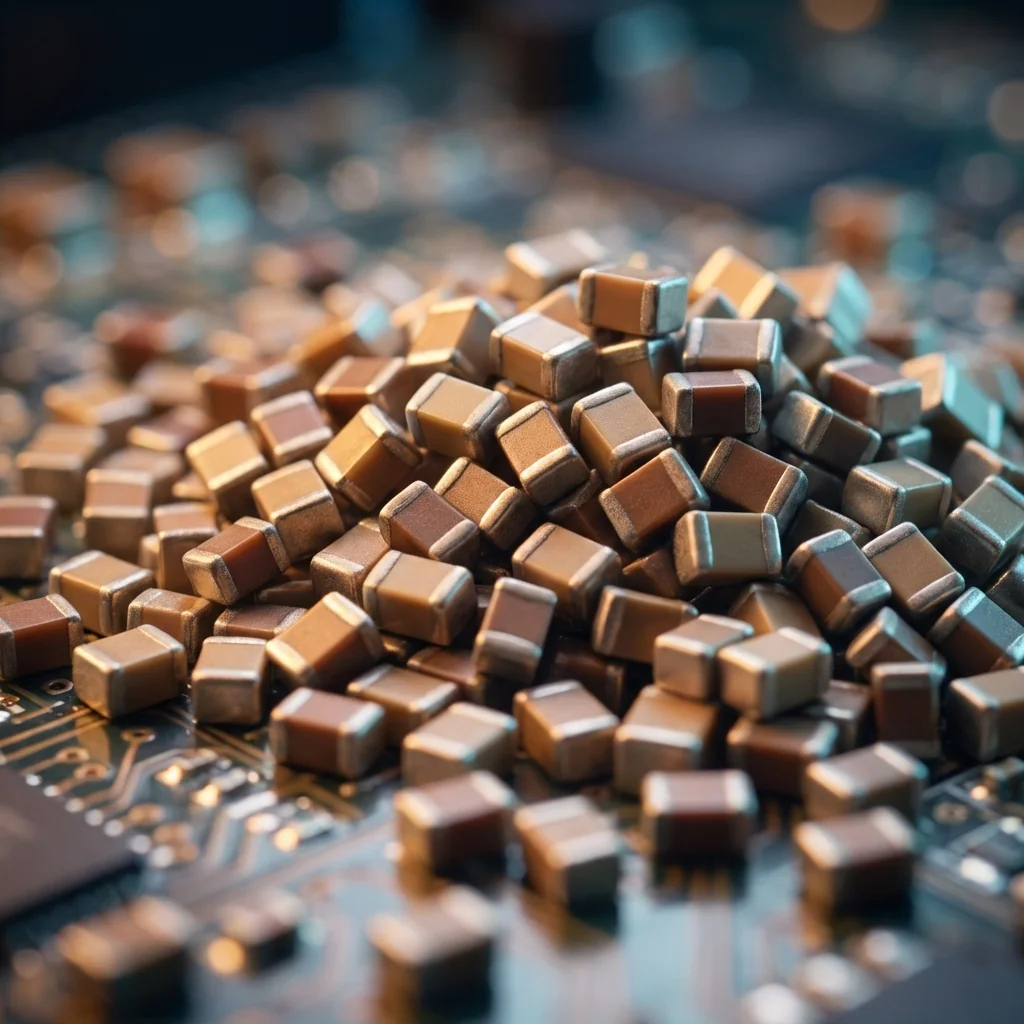
Capacitors for Medical Device Market
Overview
Technical Advantages
Medical safety certifications (IEC 60601)
Ultra-long life for medical equipment
Low leakage for battery-powered devices
High voltage for imaging equipment
Biocompatible options for implants
Capacitors for the Medical Device Market
The medical device market demands capacitors that meet the most stringent reliability and safety standards in any industry. From life-saving defibrillators to precision diagnostic imaging, capacitors for medical devices must deliver unwavering performance over decades of service. Specap has been supplying capacitors for the medical device market since 1984, serving OEMs, contract manufacturers, and biomedical equipment service companies across the United States. Equipment uptime is non-negotiable in healthcare — when a CT scanner goes down or a patient monitor fails, lives are at risk and facilities lose thousands of dollars per hour. That is why medical device manufacturers and hospital maintenance teams turn to Specap for reliable capacitor sourcing with full IEC 60601 compliance documentation, lot traceability, and technical support from engineers who understand the medical device market. #
Why Medical Device Capacitors Are Different
Capacitors for the medical device market must satisfy requirements that go far beyond standard commercial or industrial specifications: - **Patient safety**: Capacitors in patient-connected circuits must limit leakage current to levels that prevent microshock (as low as 10µA). Safety-rated capacitors (Y1, Y2) are required for isolation barriers between mains voltage and patient connections. - **Regulatory compliance**: Medical devices sold in the US, EU, and other markets must meet IEC 60601-1 (general safety), IEC 60601-1-2 (EMC), and device-specific standards. The capacitors inside these devices must support compliance with appropriate safety ratings, flammability ratings (UL 94 V-0), and documentation. - **Extended operating life**: Medical equipment is typically designed for 10-20+ years of continuous service. Electrolytic capacitors — the most failure-prone component type — must be specified with sufficient life ratings and derating to avoid premature failure during the equipment's service life. - **Traceability and documentation**: FDA 21 CFR Part 820 quality system requirements and ISO 13485 demand full component traceability. Specap provides manufacturer certificates of conformance, lot date codes, and material declarations on request. #
Diagnostic Imaging Equipment
Medical imaging systems including X-ray, CT, MRI, PET, and ultrasound use capacitors throughout their power systems and signal processing chains: - **High Voltage Capacitors**: X-ray generators use capacitors rated for 40-150kV to filter the high-voltage DC supply to the X-ray tube. These are typically specialized oil-filled or dry film capacitors designed for medical imaging. - **Pulse-Forming Networks**: CT scanners use capacitor networks to shape precise X-ray pulses for rotational imaging. Timing accuracy depends on stable capacitance values. - **MRI RF Systems**: MRI systems use precision ceramic and mica capacitors in RF coil tuning circuits operating at Larmor frequencies (typically 64MHz for 1.5T and 128MHz for 3T systems). These capacitors must exhibit high Q-factor and tight tolerance. - **Gradient Amplifier Capacitors**: MRI gradient amplifiers contain large electrolytic and film capacitors in their DC link and output filter stages. - **Ultrasound Transducers**: Piezoelectric transducer circuits use precision ceramic capacitors for tuning and matching networks. #
Patient Monitoring Systems
Bedside monitors, vital signs monitors, telemetry transmitters, and central station equipment run continuously and require: - **Long-life electrolytic capacitors** rated for 10,000+ hours at 105°C for power supplies that operate 24/7/365 - **Low-noise film and ceramic capacitors** for analog signal conditioning in ECG, SpO2, blood pressure, and EEG circuits - **Supercapacitors** for backup power during battery replacement or brief power interruptions - **Safety-rated Y capacitors** for isolation in patient-connected circuits to limit touch current #
Therapeutic and Surgical Equipment
Treatment and surgical devices have specific capacitor requirements: - **Defibrillators**: External and implantable defibrillators use specialized aluminum electrolytic capacitors that store 200-400 joules and deliver it within 5-20 milliseconds. These capacitors must maintain charge readiness over years of standby and withstand thousands of charge-discharge cycles. - **Electrosurgical Units (ESU)**: RF generators operating at 300kHz-5MHz for cutting and coagulation require high-Q ceramic capacitors for tank circuits and film capacitors for output filtering. - **Infusion Pumps**: Motor drive circuits in IV pumps and syringe drivers use motor run capacitors and electrolytic filter capacitors designed for continuous operation. - **Dialysis Machines**: Hemodialysis machines contain motor capacitors for blood and dialysate pumps, plus filter capacitors for power supply and control electronics. - **Ventilators**: Blower motor circuits use film and electrolytic capacitors that must operate reliably under continuous duty cycles. #
Implantable Medical Devices
Pacemakers, implantable defibrillators (ICDs), neurostimulators, and cochlear implants represent the most demanding capacitor application in medicine: - **Ultra-low leakage** to preserve battery life in devices designed to last 7-15 years - **Hermetically sealed** packaging (glass-to-metal or ceramic-to-metal) for long-term body implantation - **Biocompatible materials** that will not cause adverse tissue reactions - **Wet tantalum and ceramic** capacitor types rated for exceptional reliability — failure rates below 0.001% per 1000 hours #
Laboratory and Analytical Equipment
Blood analyzers, spectrophotometers, mass spectrometers, and PCR instruments use capacitors in: - High-voltage power supplies for photomultiplier tubes and ion sources - Precision timing circuits for fluorescence and absorbance measurements - Temperature control circuits for incubation and thermal cycling - Motor drives for sample handling robotics #
IEC 60601 Compliance Guide for Capacitor Selection
When selecting capacitors for medical devices, engineers must consider: 1. **Means of Protection (MOP)**: Capacitors used as part of a Means of Patient Protection (MOPP) or Means of Operator Protection (MOOP) must have appropriate safety ratings and voltage withstand capabilities. 2. **Creepage and Clearance**: Safety-rated capacitors must meet minimum creepage and clearance distances specified in IEC 60601-1 for the applicable insulation type and working voltage. 3. **Leakage Current**: Patient-connected circuits have strict leakage current limits. Y-rated safety capacitors are typically used across isolation barriers. Y1 capacitors (rated 500V AC) for reinforced insulation; Y2 capacitors (rated 300V AC) for basic or supplementary insulation. 4. **EMC Compliance**: IEC 60601-1-2 specifies electromagnetic compatibility requirements. X and Y safety capacitors are essential components in EMI filter designs for medical equipment. 5. **Flammability**: Components must meet UL 94 V-0 flammability requirements. Most quality capacitors from major manufacturers meet this requirement. #
Capacitor Manufacturers Trusted by the Medical Device Market
Specap stocks capacitors from manufacturers with established track records in the medical device market: - **Vishay** — MIL-PRF qualified tantalum capacitors used in high-reliability medical applications - **KEMET** — Medical-grade tantalum and ceramic capacitors with extensive compliance documentation - **Cornell Dubilier** — Long-life electrolytic capacitors for medical power supplies and motor drives - **Nichicon** — Extended-life aluminum electrolytic capacitors rated for 10,000+ hours - **TDK/EPCOS** — Safety-rated capacitors and precision ceramics for medical EMI filtering - **Murata** — High-Q ceramic capacitors for imaging and RF medical applications
Case Studies & Success Stories
Portable Defibrillator Capacitor Sourcing
The Challenge
FDA-cleared defibrillator design required exact-match photo-flash capacitors discontinued by the original manufacturer, threatening production line shutdown.
The Solution
Specap located certified NOS inventory with full lot traceability and coordinated ongoing supply through our obsolete capacitor network, providing 18 months of production coverage while the OEM completed requalification of a modern equivalent.
The Result
Zero production downtime, maintained FDA compliance with complete documentation chain, and saved an estimated $180K in emergency requalification costs.
Medical Device Capacitor Guide
IEC 60601-1 compliance, leakage current limits, and Y1 safety requirements
Read guideEMI/EMC Filter Capacitors
X and Y safety capacitor selection for medical EMI filtering
Read guideFilm Capacitor Selection
Dielectric comparison and application-specific recommendations
Read guide