
Renewable Energy (Solar & Wind)
Overview
Technical Advantages
Rated for 1500V DC solar architectures
20-25 year design life to match panel warranty
Thb (Temp/Humidity/Bias) tested for outdoor use
High altitude and UV resistant
Maintenance-free film technology
Powering the Transition to Net Zero
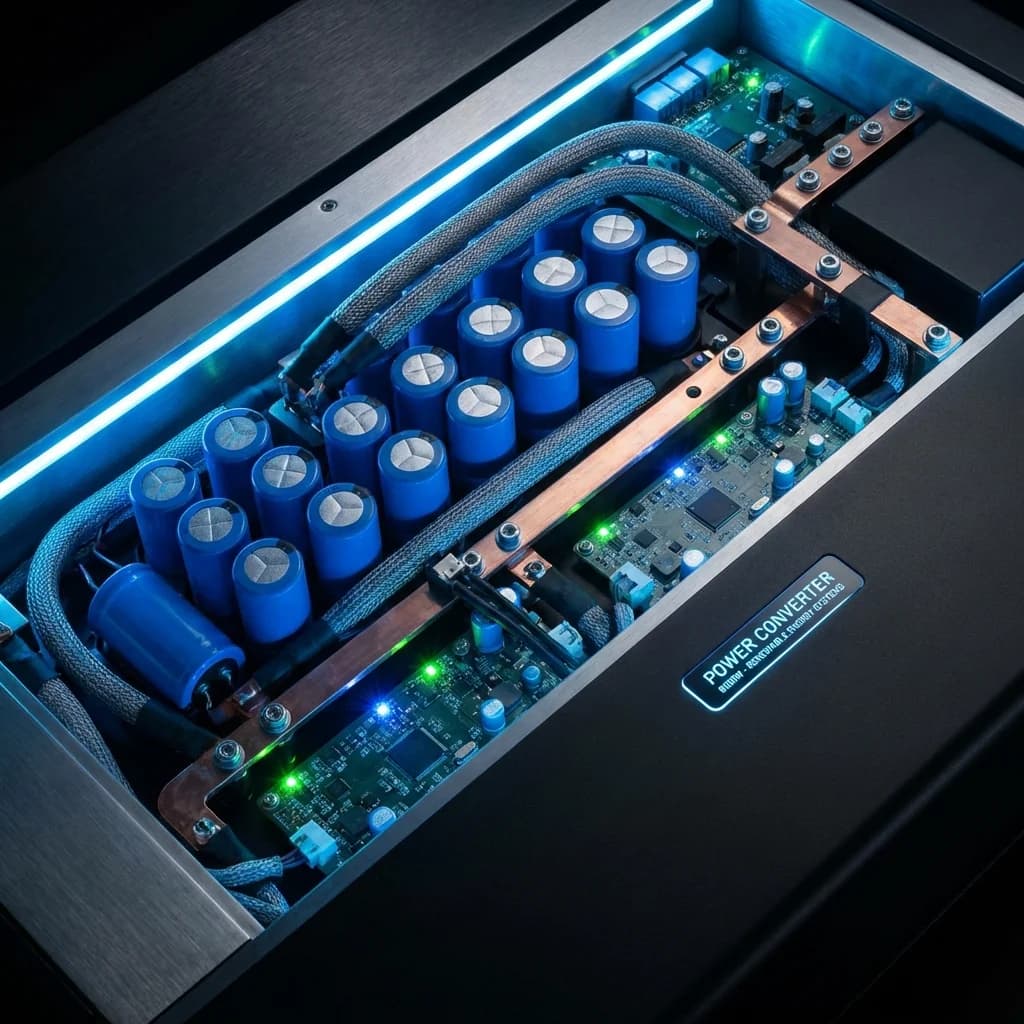
Renewable energy systems operate in some of the harshest environments on Earth — from blistering deserts to offshore wind farms. Capacitors in these systems are not just components; they are critical assets that determine the LCOE (Levelized Cost of Energy) of the entire installation. With global solar and wind capacity growing at record rates, the demand for high-reliability, long-life capacitors engineered specifically for renewable energy applications has never been greater. Specap supplies DC link capacitors, AC filter capacitors, snubber capacitors, and pitch control capacitors to solar inverter manufacturers, wind turbine OEMs, and energy storage system integrators. Our renewable energy capacitor portfolio is built around film capacitor technology — the only dielectric family that delivers the 20-25 year service life these installations require. #
Solar PV Inverters (1500V Systems)
The industry shift to 1500V DC architectures reduces cabling costs and improves system efficiency, but it also increases stress on insulation and passive components. Solar inverter capacitors must handle high DC bus voltages, significant ripple currents, and extreme thermal cycling between day and night operation. - **DC Link Capacitors**: The DC link in a solar inverter connects the MPPT input stage to the grid-tied output inverter. Film capacitors are the preferred technology for solar DC links because they offer self-healing capability, virtually unlimited cycle life, and stable capacitance over temperature. We supply segmented metallized polypropylene film capacitors rated for 1500V+ continuous bias with surge ratings up to 2250V to handle open-circuit voltages during cold morning starts. Manufacturers like KEMET, Vishay, and Cornell Dubilier produce DC link film capacitors specifically designed for solar inverter service. - **High Ripple Current Handling**: Solar inverter DC link capacitors must absorb the ripple current generated by the inverter switching stage, typically operating at 10-50kHz. The ripple current generates internal heating (I²R losses through ESR), making low-ESR film capacitors essential. A 100kW string inverter may require DC link capacitors capable of handling 50-80A RMS of ripple current continuously. - **THB Rated**: "Temperature, Humidity, Bias" is the primary failure mechanism for film capacitors in outdoor environments. Moisture penetrates the capacitor encapsulation and, under DC bias, drives electrochemical corrosion of the thin metallization layer. Specap offers **Grade IIIB (85°C / 85% RH / 1000 hours)** rated capacitors that resist moisture ingress, essential for tropical, coastal, and high-humidity installations. Standard capacitors without THB rating can fail within 2-3 years in humid climates. - **AC Output Filtering**: Grid-tied solar inverters must meet stringent power quality requirements including IEEE 1547 and IEC 61727. AC output filter capacitors — typically polypropylene film types rated for 480V-690V AC — smooth the inverter output and reduce total harmonic distortion (THD) to levels acceptable for grid interconnection. #
Wind Power Converters
Wind turbines demand ruggedness. Components mounted in the nacelle — 80-120 meters above ground — face constant vibration, rapid temperature swings, and in offshore installations, salt spray corrosion. - **Double-Fed Induction Generator (DFIG) Converters**: The most common wind turbine topology uses a DFIG with a partially rated back-to-back converter. Large DC link capacitor banks handle variable frequency power from the rotor-side converter, typically at 690V DC bus voltage. These banks must withstand continuous vibration per IEC 61400-2 and operate reliably for 20+ years between major service intervals. - **Full Power Converters**: Modern direct-drive turbines use full-rated converters with even larger DC link requirements. Film capacitor banks rated for 1100-1500V DC are standard, with ripple current requirements exceeding 100A RMS per capacitor module. - **Pitch Control Systems**: Blade pitch control is a safety-critical function — the ability to feather blades during high winds or grid faults prevents catastrophic turbine damage. Pitch control capacitor banks (typically large aluminum electrolytic or ultracapacitor modules) must store enough energy to drive the pitch motors even during a complete power loss. These capacitors are rated for 10,000+ charge-discharge cycles and operate across the full -40°C to +70°C nacelle temperature range. - **Harmonic Filtering**: Tuned capacitor banks on the grid side of the wind turbine converter prevent harmonic pollution. These LC filter stages use AC-rated film capacitors designed for continuous high-current operation at grid frequency and switching harmonics. #
Energy Storage Systems (ESS)
Battery energy storage systems (BESS) are rapidly growing as grid operators deploy them for frequency regulation, peak shaving, and renewable firming. The bidirectional Power Conversion System (PCS) at the heart of every BESS uses capacitors extensively: - **Bidirectional DC Link**: Unlike solar inverters that flow power in one direction, BESS converters charge and discharge continuously, often cycling multiple times per day for frequency regulation services. DC link capacitors must handle bipolar ripple currents and sustained high-power throughput without degradation. - **High Power Density**: Utility-scale BESS installations pack megawatts of conversion capacity into container-sized enclosures. Compact, high-energy-density film capacitors allow power electronics designers to maximize conversion capacity per container. - **Grid-Forming Capability**: Modern BESS systems provide grid-forming services including synthetic inertia and voltage support. The fast transient response required for these services depends on low-ESL, low-ESR DC link capacitors that can source current within microseconds. #
Harsh Environment Considerations
Renewable energy installations face environmental challenges that accelerate capacitor degradation: - **Humidity and Moisture**: Coastal wind farms and tropical solar installations experience sustained high humidity that attacks metallized film capacitors. THB-rated capacitors with robust encapsulation (epoxy-filled cases, hermetic sealing) are essential for these environments. - **Temperature Cycling**: Desert solar installations can experience 60°C+ daily temperature swings — from sub-zero nights to 70°C+ enclosure temperatures during peak irradiance. This thermal cycling stresses solder joints, internal connections, and the dielectric film itself. Capacitors with flexible terminal designs and internally strain-relieved winding construction resist thermal fatigue. - **UV and Altitude**: High-altitude solar installations (common in the western US and Andean regions) expose equipment to intense UV radiation and reduced air pressure that affects creepage distances and cooling capacity. Capacitors must be derated appropriately for altitude, and enclosure materials must resist UV degradation. #
Why Durability Matters
A capacitor failure in an offshore turbine or a remote solar farm is not a $50 part replacement; it is a $5,000+ service event when you factor in crane costs, technician travel, and lost energy production. We design for **zero-maintenance** lifecycles, matching the 20-25 year warranty expectation of solar panels and turbine generators. By specifying capacitors with 200,000-hour life ratings and rigorous environmental testing, Specap helps renewable energy OEMs minimize LCOE and maximize system availability.
Case Studies & Success Stories
1500V Solar Inverter Optimization
The Challenge
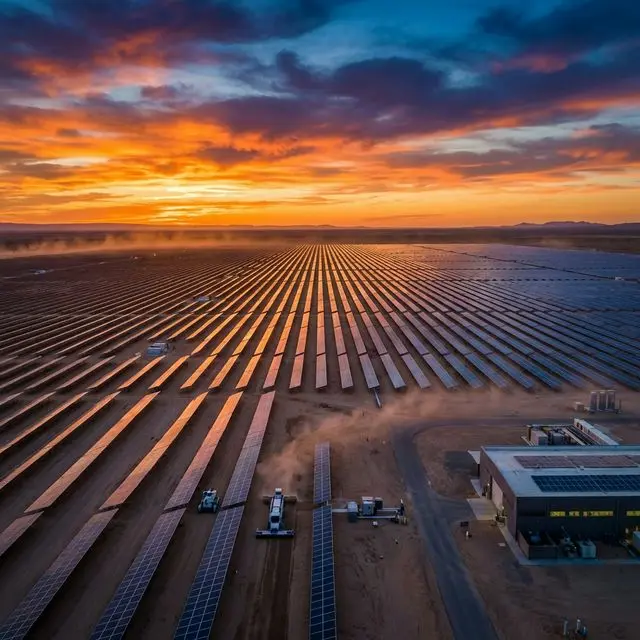
Premature capacitor failures in utility-scale solar inverters due to extreme heat and humidity bias (THB stress).
The Solution
Implemented Grade IIIB (85/85) rated segmented film capacitors with specialized UV-resistant resin coating.
The Result
2-year field study showed 98.5% reduction in capacitor failures compared to standard industry components.
Wind Turbine Pitch Control Capacitor Upgrade
The Challenge
Pitch control capacitor banks in 3MW offshore turbines degrading after 4 years due to salt-mist corrosion and sustained vibration, causing emergency shutdown failures during grid fault events.
The Solution
Specap sourced hermetically sealed, vibration-rated aluminum electrolytic capacitor modules with conformal-coated terminals and corrosion-resistant housing, rated for 15,000 charge-discharge cycles at -40°C to +70°C.
The Result
Zero pitch system failures across 48 turbines over 30 months of operation, eliminating $1.2M in annual lost production from unplanned shutdowns and reducing offshore service calls by 65%.
Film Capacitor Selection Guide
DC link and AC filter capacitor selection for solar and wind inverters
Read guideVFD Capacitor Replacement
Converter capacitor replacement for wind turbine drive systems
Read guide85°C vs 105°C Capacitors
Temperature rating impact on capacitor life in outdoor renewable installations
Read guide