
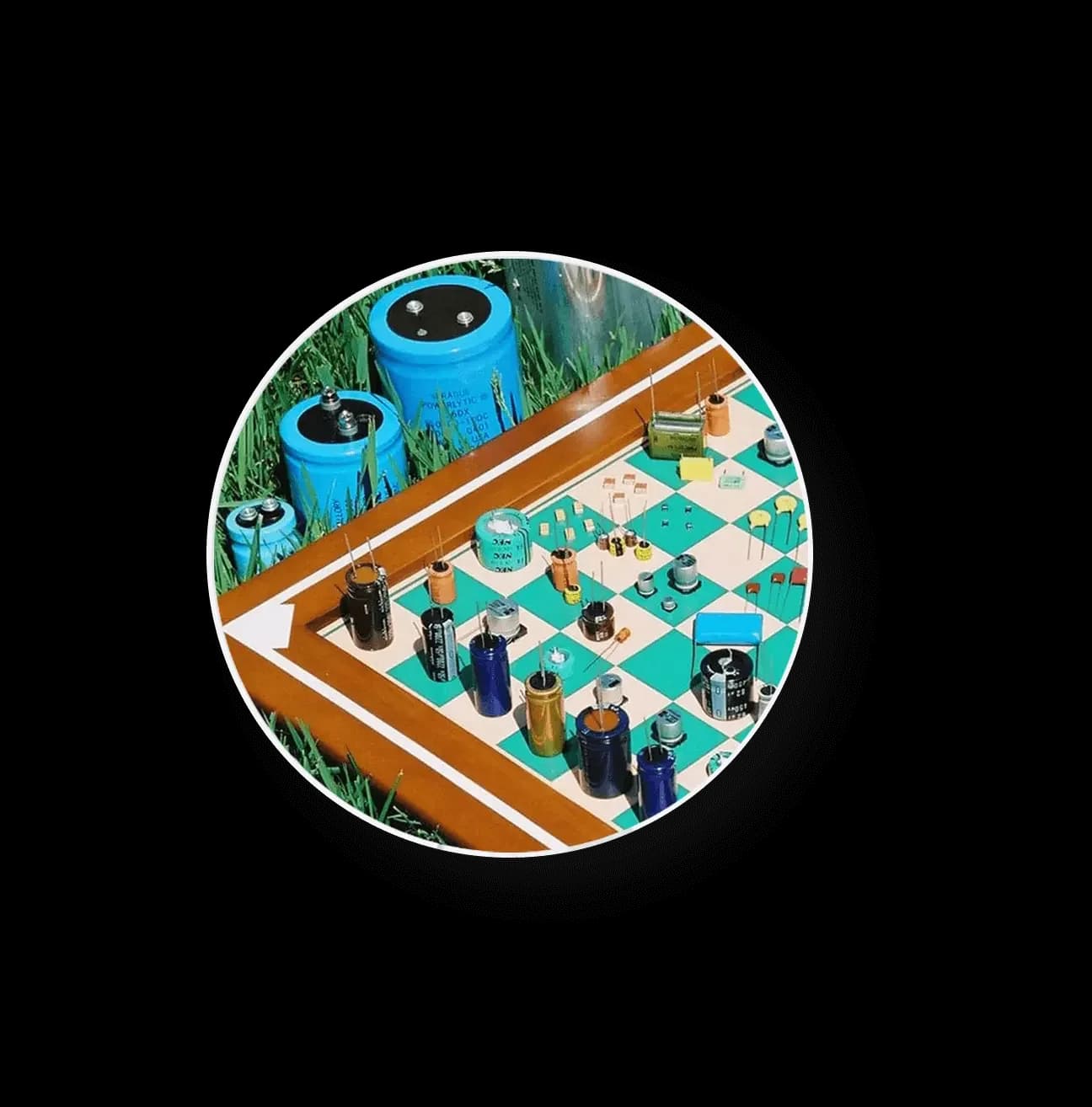
Specialty Capacitors
Premium Component Solutions
Unique capacitor types including supercapacitors, high-voltage, vacuum, and other specialized technologies for demanding applications.
Typical Specifications
Common Applications
Selection Tips
Capacitor Calculators
Use our free calculators to help with your specialty capacitors capacitor selection and circuit design
Understanding Specialty Capacitors
Beyond standard capacitor types, specialized technologies address unique application requirements — from energy storage systems requiring supercapacitors to high-power RF transmitters needing vacuum capacitors. Specap stocks specialty capacitors from leading manufacturers and can source [obsolete and hard-to-find specialty types](/obsolete-capacitors) for legacy equipment and unique applications.
Supercapacitors (EDLC / Ultracapacitors)
Electric Double Layer Capacitors (EDLCs) store energy in the electric double layer at the electrode-electrolyte interface, achieving capacitance values measured in Farads — millions of times higher than conventional capacitors. Also known as ultracapacitors or supercaps, these devices bridge the gap between batteries and traditional capacitors.
How They Work: Activated carbon electrodes with enormous surface area (up to 2,000 m²/g) create a charge separation layer just nanometers thick at the electrode-electrolyte interface. This combination of massive area and minimal separation distance produces extraordinary capacitance.
Key Specifications:
- Capacitance: 0.1F to 10,000F per cell
- Cell voltage: 2.5-3.0V (aqueous or organic electrolyte)
- ESR: 0.3mΩ to 100mΩ depending on size
- Cycle life: 500,000 to 1,000,000+ charge/discharge cycles
- Power density: 10-15 kW/kg (10-50x higher than batteries)
- Energy density: 5-10 Wh/kg (much lower than batteries)
Applications:
- **Regenerative braking**: Capturing kinetic energy in trains, buses, and heavy equipment
- **Peak power assist**: Supplementing batteries during high-current events (engine cranking, motor starting)
- **UPS and backup power**: Providing ride-through power during brief outages or generator startup
- **Grid stabilization**: Frequency regulation and power quality in utility applications
- **Renewable energy smoothing**: Buffering solar and wind output fluctuations
Series Stacking: Since individual cells are limited to 2.5-3.0V, practical applications require series-connected cells. Active or passive cell balancing circuits prevent any cell from exceeding its voltage limit, which is critical for reliability and lifespan.
Hybrid Capacitors
Hybrid capacitors combine features of different energy storage technologies:
Lithium-Ion Capacitors (LICs): Use a lithium-doped carbon anode (like a battery) with an EDLC cathode. This increases energy density to 15-30 Wh/kg while maintaining better power density and cycle life than batteries. LICs are gaining traction in automotive start-stop systems and industrial energy recovery.
Battery-Capacitor Hybrids: Devices that use one electrode with battery-type chemistry and one with capacitor-type chemistry. These aim to combine the energy density of batteries with the power density and cycle life of capacitors.
High-Voltage Capacitors
Special constructions for voltages ranging from hundreds to tens of thousands of volts serve industrial, medical, and scientific applications.
Pulse Discharge Capacitors: Designed to store energy and release it in microsecond to millisecond pulses. Used in:
- Medical defibrillators (2-5kV, 200-360J)
- Pulsed lasers (1-50kV)
- Electromagnetic forming (10-100kV)
- Marx generators and pulse forming networks
AC Power Capacitors: Large film or oil-filled capacitors for power factor correction, harmonic filtering, and reactive power compensation in utility and industrial power systems. Ratings from 1kVAR to several MVAR per unit.
Doorknob and Disc Capacitors: High-voltage ceramic capacitors in disc or doorknob form factors for RF transmitters, X-ray equipment, and high-voltage test systems. Voltages to 50kV+ with capacitance from 10pF to 10nF.
Vacuum Capacitors
Glass or ceramic envelopes containing metal electrodes separated by vacuum. The vacuum dielectric provides the highest voltage breakdown strength and lowest losses of any practical dielectric.
Key Advantages:
- Voltage ratings: 5kV to 100kV+
- Current ratings: Up to 1,000A+ RF current
- Extremely low losses (Q > 5,000)
- Available in fixed and variable (tunable) configurations
- No dielectric aging or degradation
Applications:
- **Broadcast transmitters**: Matching networks and tank circuits for AM, FM, and TV transmitters
- **Industrial RF heating**: Dielectric and induction heating equipment for manufacturing
- **Plasma generation**: RF matching networks for semiconductor processing and surface treatment
- **Medical equipment**: Diathermy and MRI RF systems
- **Amateur radio**: High-power amplifier tank circuits and antenna tuners
Variable Vacuum Capacitors: Use a bellows mechanism to change the electrode overlap area, providing smooth, continuous capacitance adjustment. Essential for tuning high-power RF systems.
Mica Capacitors (Power and Transmitting)
Beyond [silver mica capacitors](/capacitors/silver-mica) used in precision RF circuits, specialized mica capacitors serve high-power applications:
Transmitting Mica Capacitors: Large mica capacitors rated for high RF current and high voltage, used in broadcast transmitter plate circuits, antenna couplers, and high-power RF matching networks. These capacitors handle kilowatts of RF power with low losses.
Button Mica Capacitors: Compact disc-shaped mica capacitors designed for feedthrough mounting and bypass applications at high frequencies. Used in RF amplifier stages and transmitter output circuits.
Doorknob Mica: High-voltage mica capacitors in a cylindrical "doorknob" housing, used in high-voltage RF circuits and pulse applications.
Safety Capacitors (X and Y Class)
Safety capacitors are specifically designed and certified for connection to AC power lines, where capacitor failure could create electric shock hazards. They incorporate fail-safe construction that ensures open-circuit failure mode.
X Class (Line-to-Line):
- **X1**: Rated for pulse voltage > 2.5kV, < 4kV. Used in industrial environments with high transient exposure.
- **X2**: Rated for pulse voltage ≤ 2.5kV. Most common class for consumer and commercial equipment.
- **X3**: Used in general-purpose applications with lower transient exposure.
Y Class (Line-to-Ground):
- **Y1**: Rated for peak voltage up to 500V AC. Used in applications with reinforced insulation requirements — [medical devices](/applications/medical) often require Y1 for patient safety circuits.
- **Y2**: Rated for peak voltage up to 300V AC. Most common class for consumer equipment.
- **Y3**: Used in general-purpose applications.
- **Y4**: For lower voltage applications.
Certification Requirements: Safety capacitors must carry certification from recognized testing laboratories (UL, CSA, VDE, CQC) confirming they meet IEC 60384-14 requirements for construction, endurance, and fail-safe behavior. Using non-certified capacitors in line-connected positions violates safety standards and can create shock and fire hazards.
For detailed safety capacitor selection guidance, see our [EMI/EMC Filter Capacitor Guide](/resources/blog/emi-emc-filter-capacitor-selection-guide).
Feedthrough Capacitors
Feedthrough (or feed-through) capacitors are designed for EMI filtering at bulkhead or panel penetrations. The signal conductor passes through the center of the capacitor, with the outer electrode grounded to the enclosure.
Key Advantages: Feedthrough construction eliminates lead inductance, providing superior high-frequency filtering compared to leaded capacitors. Effective from DC to several GHz.
Applications: Shielded enclosure feedthroughs, medical device housings, military equipment EMI barriers, and high-frequency test equipment interfaces.
Choosing the Right Specialty Capacitor
The specialty capacitor market is diverse. Key selection criteria include:
1. **Energy vs Power**: Supercapacitors for high energy, conventional caps for high power density
2. **Voltage**: High-voltage types for kV+ applications, safety caps for line-connected circuits
3. **Frequency**: Vacuum and mica for high-power RF, feedthrough for broadband EMI
4. **Certification**: Safety capacitors MUST carry appropriate agency certifications
5. **Environment**: Consider temperature, humidity, vibration, and maintenance access
For an overview of all capacitor technologies and how specialty types compare, see our <a href="/resources/guides/capacitor-types">Capacitor Types Guide</a>. Use our <a href="/resources/calculators/energy-storage">Energy Storage Calculator</a> to size supercapacitor banks for backup power applications, or our <a href="/resources/calculators/series-parallel">Series/Parallel Calculator</a> for voltage stacking configurations.
Specialty Capacitors FAQs
Common questions about this capacitor type
Request a Quote
Get competitive pricing tailored to your specific requirements.
Need a Substitute?
Our engineers cross-reference specs to find compatible alternates that meet or exceed your original part.
Find AlternatesObsolete Part?
We specialize in sourcing discontinued and hard-to-find capacitors with full traceability documentation.
Source Obsolete PartBulk Buy?
Volume pricing with same-day quotes. We stock large quantities and offer blanket order programs.
Get Bulk PricingRelated Resources
Explore our technical resources to learn more about specialty capacitors capacitors and make better selection decisions.
Capacitor Types Guide
Compare all capacitor technologies and their ideal use cases
Derating Guide
Voltage and temperature derating best practices for reliability
Capacitor Glossary
Definitions for ESR, ripple current, dielectric, and 50+ terms
Cross-Reference Tool
Find equivalent replacements for obsolete or discontinued parts
Explore Related Topics
Related Categories
Need Help Selecting Specialty Capacitors?
Our expert team has decades of experience helping customers find the right capacitors. Contact us for technical guidance or custom quotes.