
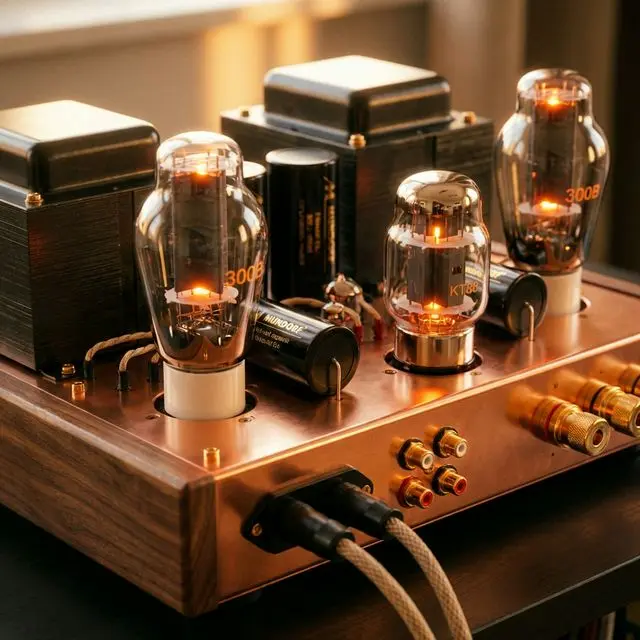
Best Capacitors for Audio | Hi-Fi, Pro Sound & Amplifier Capacitors
Overview
Technical Advantages
Low distortion and ESR for clean signal paths
Tight tolerance (1-5%) for crossover accuracy
Premium brands trusted by audio engineers
Large selection of values for custom builds
Vintage and NOS capacitors for restoration
Best Capacitors for Audio Applications
Capacitors are among the most sonically important components in any audio circuit. From the coupling capacitors in a tube amplifier's signal path to the crossover network capacitors that divide frequencies between woofers and tweeters, the right capacitor choice directly affects sound quality, clarity, and tonal character. Specap stocks premium audio capacitors from manufacturers trusted by audiophiles, recording studios, and pro sound equipment builders worldwide — including Nichicon MUSE, Rubycon, Panasonic, WIMA, and Cornell Dubilier. #
Amplifier Capacitors
Audio amplifiers — both solid-state and tube — rely on capacitors at every stage of the signal chain: - **Coupling Capacitors**: Film capacitors in the signal path between amplifier stages. These capacitors block DC while passing the audio signal, and their dielectric type directly affects the sound character. Polypropylene film capacitors are preferred for their low dielectric absorption and neutral sound signature. - **Power Supply Filter Capacitors**: Large aluminum electrolytic capacitors in the amplifier's power supply filter the rectified AC into smooth DC. Low-ESR, high-ripple-current capacitors provide a stable power rail that directly improves dynamic range, bass authority, and noise floor. Nichicon KG and Rubycon MCZ series are popular choices. - **Bypass Capacitors**: Small film or ceramic capacitors placed across power supply rails to shunt high-frequency noise to ground. Polypropylene or C0G ceramic types are preferred for their low-loss characteristics. - **Output Coupling Capacitors**: In single-ended tube amplifiers and some solid-state designs, output coupling capacitors pass the full audio signal to the speakers. High-quality polypropylene or paper-in-oil (PIO) capacitors are essential here. #
Speaker Crossover Capacitors
Passive crossover networks in speakers use capacitors, inductors, and resistors to divide the audio spectrum between drivers: - **High-Pass Filters**: Capacitors in series with the tweeter roll off low frequencies. Crossover capacitors must have tight tolerance (±5% or better) for accurate frequency division and consistent speaker-to-speaker matching. - **Polypropylene Film**: The standard choice for quality crossovers. Low dielectric absorption, excellent stability, and neutral sonic character. Metallized polypropylene offers a good balance of size and performance. - **Polyester (Mylar)**: Lower cost alternative acceptable for budget crossovers and mid-bass sections. Higher dielectric absorption than polypropylene. - **Audiophile Crossover Capacitors**: Premium tin-foil-and-film types, copper-foil types, and oil-filled paper capacitors for reference-grade crossovers. These are available in values from 0.1µF to 100µF. #
Tube Amplifier Capacitors
Vacuum tube (valve) amplifiers have specific capacitor requirements: - **High Voltage Electrolytic Capacitors**: Filter capacitors rated for 350V-500V+ in tube amp power supplies. Multi-section can capacitors are popular for vintage restorations. - **Coupling Capacitors (250V-630V)**: Signal path capacitors between tube stages. Orange Drop, Sprague Vitamin Q, Cornell Dubilier, and WIMA are classic choices for tube amp builders. - **Cathode Bypass Capacitors**: Electrolytic capacitors (25V-50V) bypassing cathode resistors to increase stage gain. Audio-grade types improve midrange clarity. - **Vintage Replacement Capacitors**: We source NOS (New Old Stock) and modern replacement capacitors for restoring vintage tube amplifiers — Fender, Marshall, Vox, Marantz, McIntosh, Fisher, and more. #
Pro Sound and Studio Equipment
Professional audio equipment including mixing consoles, outboard processors, and studio monitors requires: - **Low-noise film capacitors** for precision signal conditioning - **Long-life electrolytic capacitors** for equipment that runs 24/7 in recording studios - **Tight-tolerance capacitors** for matched filter circuits #
Choosing the Right Audio Capacitor
The "best" audio capacitor depends on the application: 1. **For crossovers**: Polypropylene film, ±5% or tighter tolerance. Match values between speakers. 2. **For tube amp signal path**: Polypropylene or paper-in-oil film, 250V-630V rated. 3. **For power supply filtering**: Low-ESR audio-grade electrolytic (Nichicon KG, MUSE, Rubycon MCZ). 4. **For bypass**: Small polypropylene or C0G ceramic, 0.01µF-0.47µF. 5. **For restorations**: NOS capacitors or modern equivalents that match original specifications and form factor. #
Audio Capacitor Brands We Stock
- **Nichicon** — MUSE series (ES, KZ, FG), KG Gold Tune, Fine Gold. The gold standard for audio electrolytic capacitors. - **Rubycon** — MCZ, ZLH, YXF series for audio power supplies. Known for tight specs and long life. - **Panasonic** — FC, FM, FR series. Reliable and consistent for audio applications. - **WIMA** — MKP and MKS film capacitors for European tube amp designs. - **Cornell Dubilier** — Orange Drop and classic film types for tube amplifiers. - **Illinois Capacitor** — Motor and audio film capacitors. We also source vintage and NOS capacitors for audio restoration projects — [Sprague](/sprague-capacitors) Black Beauty, [Mallory](/mallory-capacitors), [Sangamo](/sangamo-capacitors), and more through our [obsolete capacitor sourcing](/obsolete-capacitors) network. #
DAC and Digital Audio Capacitors
Digital-to-analog converters (DACs) and digital audio equipment have specific capacitor needs that differ from traditional analog audio: - **Output Stage Decoupling**: Low-noise ceramic (C0G/NP0) or polypropylene film capacitors in the DAC output stage minimize digital noise coupling into the analog signal. Avoid X7R and X5R ceramics in audio signal paths due to their voltage-dependent capacitance (microphonic effect). - **Clock Circuit Filtering**: Precision timing circuits in DACs and digital transports require ultra-stable capacitors. C0G ceramic or polystyrene film capacitors maintain accurate clock frequencies essential for low-jitter performance. - **USB/SPDIF Input Filtering**: Input stage capacitors must handle high-frequency digital signals while blocking noise from computer power supplies and digital sources. - **Power Supply Regulation**: Multi-stage power supply regulation in high-end DACs uses low-ESR polymer capacitors and film capacitors to achieve the ultra-low noise floors required for high-resolution audio (24-bit/192kHz and DSD). #
Vintage Amplifier Restoration
Restoring classic amplifiers requires specific capacitor knowledge: - **Fender Guitar Amplifiers**: Tweed, Blackface, and Silverface amps originally used [Mallory](/mallory-capacitors) and [Sprague](/sprague-capacitors) electrolytic capacitors. Filter capacitors (20µF-100µF at 350-500V) are the most common replacement need. Coupling capacitors (0.01µF-0.1µF at 400-600V) affect tone character. Many Fender enthusiasts prefer [Sprague](/sprague-capacitors) Orange Drop replacements for their reliability and tonal neutrality. - **Marshall & Vox**: British amplifiers from the 1960s-70s used Mullard and other UK-sourced capacitors. Modern replacements from [Vishay](/vishay-capacitors) and CDE provide excellent performance while fitting the original mounting. - **Hi-Fi Receivers (Marantz, McIntosh, Fisher, Scott)**: Vintage hi-fi restoration typically requires full capacitor replacement (known as "recapping") to restore original performance. Power supply filter capacitors are critical — dried-out electrolytics cause hum, reduced dynamic range, and potential damage to output transistors or transformers. - **Japanese Vintage (Pioneer, Sansui, Kenwood)**: 1970s-80s Japanese receivers and amplifiers used domestic capacitors from Nichicon, Rubycon, and Elna that may need replacement after 40+ years. Many of these use non-standard form factors that require careful cross-referencing. #
Pro Audio and Studio Equipment
Professional recording and live sound equipment places unique demands on capacitors: - **Mixing Console Channel Strips**: Each channel in a large-format console (SSL, Neve, API) contains dozens of capacitors in the preamp, EQ, dynamics, and output stages. Tight-tolerance polypropylene or polystyrene capacitors in the EQ sections are critical for accurate frequency response and channel-to-channel matching. - **Outboard Signal Processors**: Compressors, equalizers, and reverb units from manufacturers like Universal Audio, Empirical Labs, and Manley Labs use precision capacitors in their signal paths that directly affect sonic character. - **Studio Monitor Crossovers**: Active studio monitors use capacitors in their internal crossover networks and amplifier stages. Low-ESR, tight-tolerance types ensure accurate frequency division and phase response. - **Phantom Power Supplies**: 48V phantom power for condenser microphones requires clean, low-noise DC. Film and audio-grade electrolytic capacitors in the phantom power circuit affect microphone performance and noise floor.
Case Studies & Success Stories
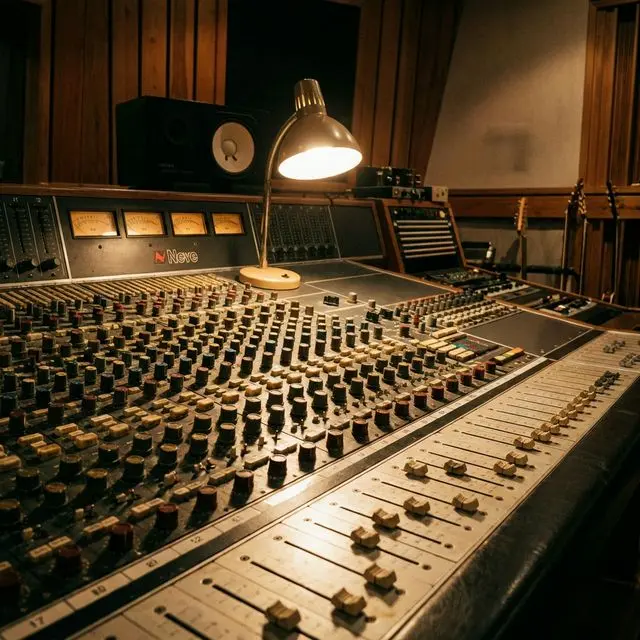
Legendary Console Restoration
The Challenge
Restoring a vintage 1970s large-format mixing console requiring tight-tolerance, low-leakage capacitors for the signal path.
The Solution
Sourced a complete set of high-end Nichicon MUSE and premium polypropylene film capacitors with matched tolerances.
The Result
Restored original sonic transparency and noise floor, extending the life of a priceless piece of audio history.
Film Capacitor Selection Guide
Polypropylene vs polyester — choosing the right film cap for audio circuits
Read guideCapacitor Types Explained
Compare electrolytic, film, and ceramic capacitors for audio applications
Read guideComplete Guide to Electrolytic Capacitors
Power supply filter capacitor selection for amplifiers
Read guide