The Complete Guide to Electrolytic Capacitors: Types, Applications, and Selection
Last Updated: January 2026 | Reading Time: 18 minutes
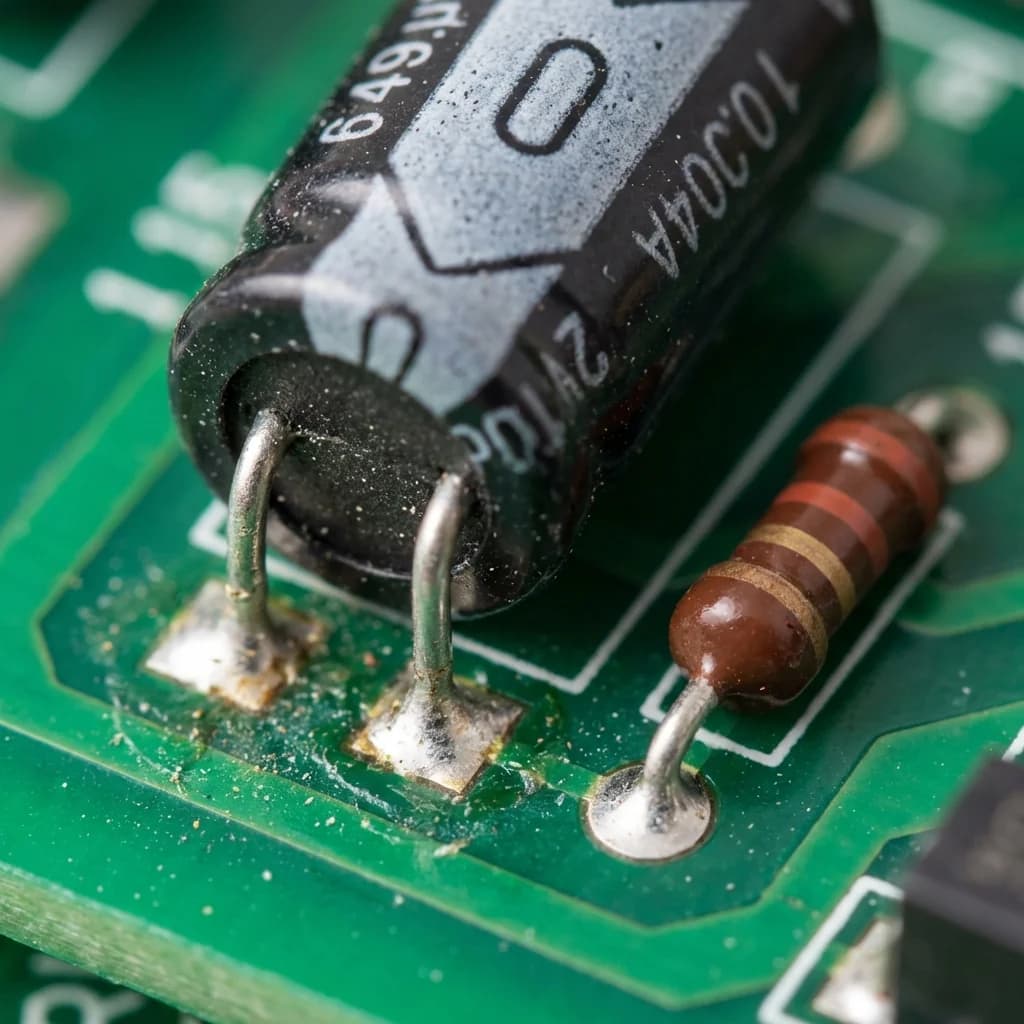
If you've ever opened up a power supply, amplifier, or just about any electronic device, you've seen them—those cylindrical aluminum components with distinctive markings. Electrolytic capacitors are the workhorses of the electronics world, handling everything from power filtering to energy storage. After four decades in the capacitor business, we've learned that understanding these components is essential for anyone working with electronics.
This guide covers everything you need to know about electrolytic capacitors, from basic principles to advanced selection criteria.
Electrolytic capacitors are polarized capacitors that use an electrolyte—a liquid or gel containing ions—as one of their electrodes. This construction method allows them to achieve much higher capacitance values in a smaller package compared to other capacitor types.
The most common type, aluminum electrolytic capacitors, use an aluminum oxide layer as the dielectric. This layer is incredibly thin (measured in nanometers), which is why electrolytic capacitors can pack so much capacitance into a relatively small space.
| Property | Typical Range |
|---|
| Capacitance | 0.1µF to 3.3F (supercaps) |
| Voltage Rating | 4V DC to 500V DC |
| Temperature Range | -40°C to +105°C |
| ESR | Higher than film capacitors |
| Lifespan | 2,000 to 10,000+ hours |
Radial electrolytics have both leads coming out from the same end of the capacitor. They're the most common type you'll encounter and are designed for vertical PCB mounting.
Common Applications:
- Consumer electronics
- Computer motherboards
- Audio equipment
- General-purpose filtering
Available Series:
- General Purpose (85°C) — Standard applications, cost-effective
- High Temperature (105°C) — Industrial use, longer life
- Low ESR — Switching power supplies, high-frequency applications
- Ultra-Miniature — Space-constrained designs
- Non-Polar — Speaker crossovers, AC coupling
Axial capacitors have leads extending from opposite ends, designed for horizontal mounting or through-hole applications where radial types won't fit.
Ideal For:
- Vintage audio equipment restoration
- Military/aerospace applications
- Point-to-point wiring
- Applications requiring horizontal mounting
These large-format capacitors are built for high-ripple current applications and extended life. They feature screw terminals for secure connections in high-vibration environments.
Specifications:
- Capacitance: Up to 400,000µF
- Voltage: 10V to 500V DC
- Life expectancy: 10,000+ hours at rated temperature
- Construction: Heavy-duty aluminum can with screw terminals
Primary Applications:
- Industrial drives and VFDs
- UPS systems
- DC bus filtering
- Welding equipment
- Large power supplies
- Elevator controls
Pro Tip: Computer grade capacitors are often the first components to fail in industrial equipment. When replacing them, always match or exceed the original voltage rating and ripple current specification. For more on these components, see our Computer Grade Capacitors Guide.
Snap-in capacitors bridge the gap between radial and screw terminal types. They feature tabs that snap into PCB holes, providing both electrical connection and mechanical stability.
Advantages:
- No soldering required for mechanical attachment
- Higher current handling than radial types
- More compact than screw terminal capacitors
- Suitable for automated assembly
Common Uses:
- Switching power supplies
- Inverters and converters
- Motor drives
- LED drivers
For modern, compact designs, SMD electrolytics offer high capacitance in a surface-mountable package.
Considerations:
- Lower height profiles available (as low as 5mm)
- Automated pick-and-place compatible
- Temperature limitations during reflow soldering
- Generally lower voltage ratings than through-hole
Measured in microfarads (µF), the capacitance value indicates how much charge the capacitor can store. For electrolytic capacitors, tolerances are typically -20% to +80% for standard grades.
Tolerance Classes:
| Class | Tolerance |
|---|
| M | ±20% |
| K | ±10% (premium) |
| Standard | -20% / +80% |
The Working Voltage DC is the maximum continuous DC voltage the capacitor can handle. Always select a voltage rating higher than your circuit's maximum voltage.
Derating Guidelines:
- General electronics: 20% derating (use 50V cap for 40V circuit)
- Industrial/harsh environment: 30-50% derating
- High reliability: 50% derating
This specifies the maximum operating temperature. Common ratings are:
| Rating | Typical Use |
|---|
| 85°C | Consumer electronics, office equipment |
| 105°C | Industrial, automotive, harsh environments |
Life Impact: For every 10°C reduction in operating temperature, capacitor life approximately doubles.
ESR measures the internal resistance of the capacitor. Lower ESR means:
- Less heat generation
- Better high-frequency performance
- Higher ripple current handling
Low-ESR capacitors are essential for:
- Switch-mode power supplies
- Computer motherboards
- High-frequency filtering
This specification indicates the maximum AC current the capacitor can handle continuously. Exceeding this rating causes excessive heating and premature failure.
Rule of Thumb: In power supply applications, always calculate your expected ripple current and select capacitors with at least 20% margin.
Electrolytic capacitors are often the weakest link in electronic equipment. Understanding failure modes helps you select the right components and predict maintenance needs.
Cause: High temperature operation causes the electrolyte to evaporate through the rubber seal.
Symptoms:
- Gradual loss of capacitance
- Increasing ESR
- Equipment performance degradation
Prevention:
- Choose 105°C rated capacitors
- Ensure adequate ventilation
- Position away from heat sources
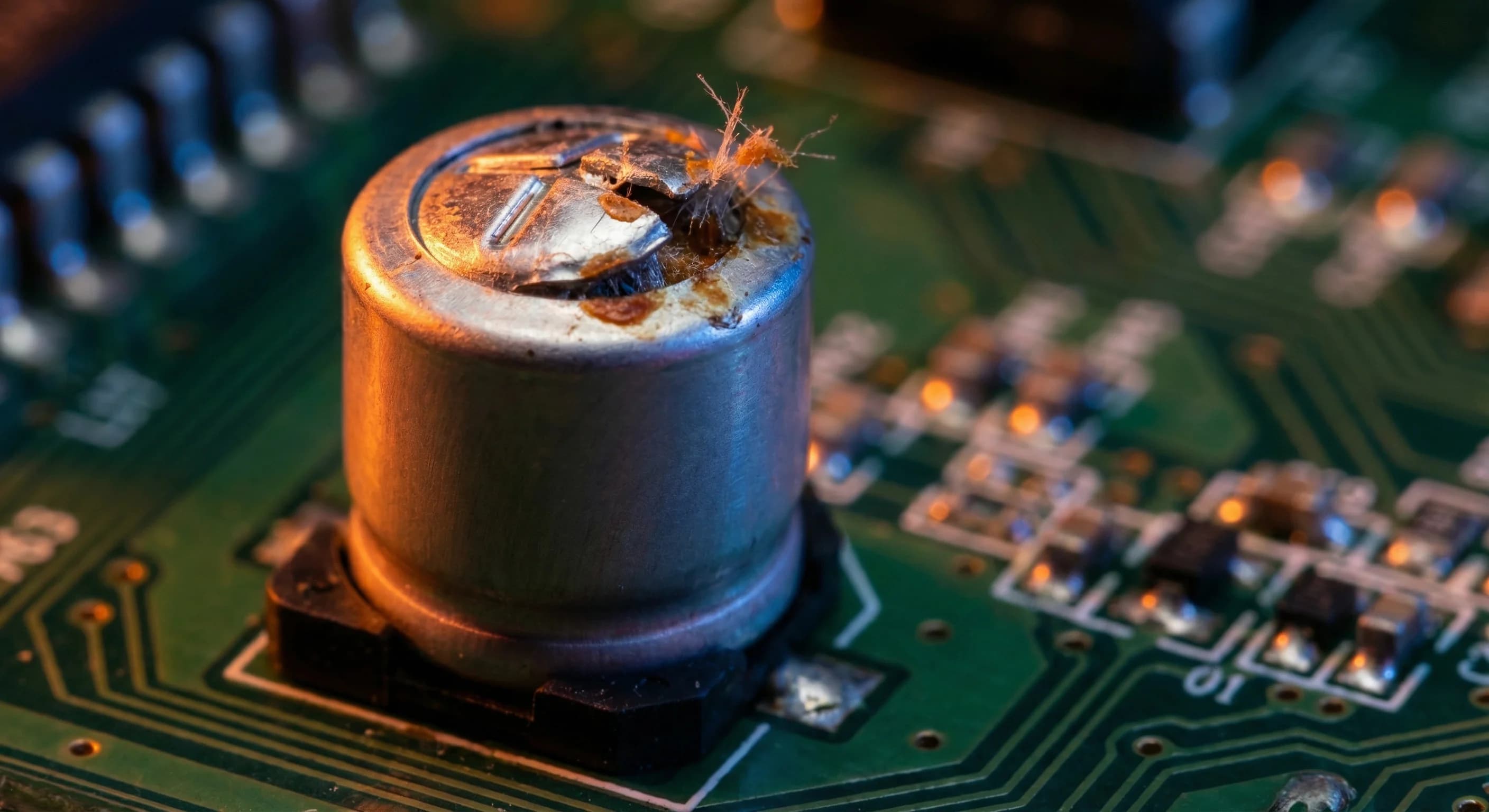
Cause: Voltage spikes or incorrect component selection.
Symptoms:
- Bulging top vent
- Electrolyte leakage
- Possible rupture
Prevention:
- Apply voltage derating
- Use transient protection
- Verify circuit voltage before power-up
Cause: Installing the capacitor backwards or AC application on polarized types.
Symptoms:
- Rapid failure
- Possible explosion
- Fire hazard
Prevention:
- Double-check orientation before installation
- Use keyed connectors where possible
- For AC applications, use non-polar types
Cause: Excessive AC current through the capacitor.
Symptoms:
- Hot to touch
- Shortened life
- Eventual venting
Prevention:
- Calculate ripple current requirements
- Select adequate ripple current rating
- Parallel capacitors if needed
Calculate your filtering or storage requirements. For power supply applications, common formulas include:
For ripple voltage: C = I / (f × ΔV)
Where:
- C = Capacitance in Farads
- I = Load current in Amps
- f = Ripple frequency in Hz
- ΔV = Acceptable ripple voltage
Identify your circuit's maximum voltage, including transients. Apply appropriate derating:
| Application | Minimum Derating |
|---|
| Consumer | 20% |
| Industrial | 30% |
| Automotive | 40% |
| Military | 50% |
| Environment | Recommended Rating |
|---|
| Air-conditioned | 85°C |
| Standard industrial | 105°C |
| Near heat sources | 105°C (heavily derated) |
| Outdoor enclosures | 105°C |
Low ESR Required For:
- Switching frequencies above 20kHz
- High ripple current applications
- CPU/GPU power delivery
- LED drivers
Verify that your selected capacitor fits:
- Height restrictions
- PCB footprint
- Lead spacing
- Mounting style (radial, axial, snap-in, SMD)
Electrolytic capacitors serve as the primary energy storage and filtering components in power supplies. Key positions include:
- Input Filtering: Smoothing rectified AC
- DC Bus: Energy storage between stages
- Output Filtering: Final ripple reduction
Computer grade capacitors are critical in UPS systems, providing:
- DC bus energy storage
- Ride-through capability during switchover
- Output voltage stabilization
Variable frequency drives use large electrolytic capacitors in the DC link. These capacitors must handle:
- High ripple currents
- Voltage transients
- Continuous operation
Quality electrolytic capacitors affect sound quality in:
- Power supply rails
- Speaker crossover networks (non-polar types)
- Coupling and decoupling
Automotive applications demand:
- Extended temperature range (-40°C to +105°C)
- Vibration resistance
- Long operational life
Electrolytic capacitors have a limited shelf life due to the oxide layer reformation requirements:
| Storage Condition | Recommended Maximum |
|---|
| Original packaging, cool/dry | 2-3 years |
| Opened packaging | 1-2 years |
| Humid conditions | 6-12 months |
Capacitors stored for extended periods require reformation—gradually applying voltage to rebuild the oxide layer:
- Start at 10% of rated voltage
- Increase in 10% increments
- Hold each level for 1-5 minutes
- Monitor for excessive leakage current
- Full voltage should show minimal leakage
- Avoid touching leads with bare hands (oils affect solderability)
- Store in original packaging when possible
- Keep away from humidity and temperature extremes
- Use ESD protection for sensitive devices
| Symptom | Likely Cause | Action |
|---|
| Bulging top | Overvoltage or overheating | Replace immediately |
| Leaking electrolyte | Seal failure or overheating | Replace and clean |
| Discolored leads | Overheating | Check circuit, replace |
| Crooked/tilted | Heat damage to base | Replace |
Using a Multimeter:
- Discharge capacitor safely
- Set meter to capacitance mode
- Compare reading to rated value
- Tolerance of ±20% is acceptable for most applications
ESR Testing:
- Use dedicated ESR meter
- Test in-circuit if possible
- Compare to manufacturer specifications
The electrolytic capacitor market includes thousands of variations. Finding the right component—especially for repair or replacement applications—requires deep product knowledge.
Factors that matter:
- Exact specifications matching — Not all 100µF 25V capacitors are equivalent
- Quality verification — Counterfeit components are a real issue
- Obsolete part sourcing — Legacy equipment needs legacy components
- Technical support — Application guidance saves costly mistakes
With over 10,000 electrolytic capacitor SKUs in stock—including hard-to-find and obsolete types—working with a specialist ensures you get the right part for your application.
- Match specifications carefully — Capacitance, voltage, temperature, and ESR all matter
- Apply voltage derating — 20-50% depending on application criticality
- Consider temperature — Choose 105°C for industrial and harsh environments
- Monitor for failure signs — Bulging, leaking, or hot capacitors need immediate replacement
- Source from specialists — Quality and authenticity matter for reliability
Yes, using a higher voltage rating is always safe and often recommended. The capacitor may be physically larger, so verify it fits your application.
The liquid electrolyte slowly evaporates over time, especially at elevated temperatures. This is why capacitors are often the first components to fail in electronic equipment.
Low-ESR capacitors have specially formulated electrolytes and construction that reduce internal resistance. They're essential for high-frequency switching applications but not necessary for all uses.
Standard electrolytic capacitors are polarized and will fail with AC voltage. For AC applications, use non-polar electrolytic capacitors or film capacitors.
The negative terminal is marked with a stripe of minus signs (–) on the capacitor body. The positive lead is typically longer on new components.
Internal pressure from gas generation due to electrolyte breakdown. This is a safety feature—the top is designed to vent before the capacitor can rupture.
Need help selecting the right electrolytic capacitor for your application? Our technical team has over 40 years of experience helping engineers and technicians find the perfect component. Contact us for expert guidance on your specific requirements.