
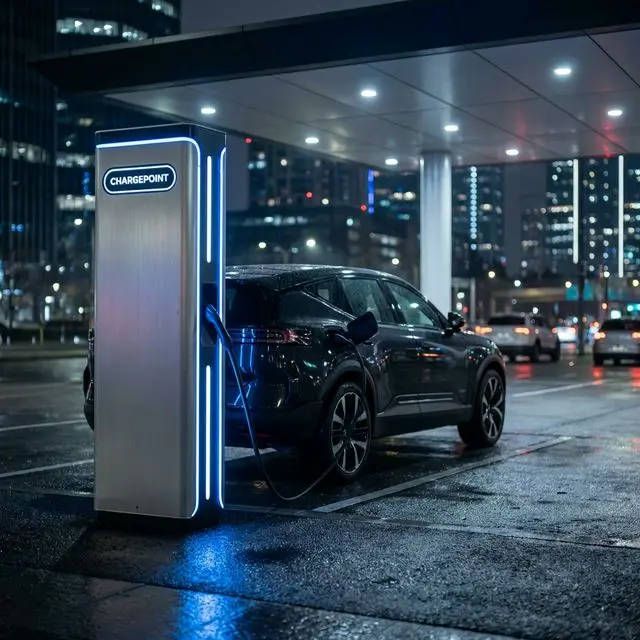
EV Charging Infrastructure
Overview
Technical Advantages
Supports 400V and 800V EV architectures
High power density for compact charger posts
Low acoustic noise (anti-resonance designs)
Automotive-grade reliability (AEC-Q200 path)
Wide temperature range for outdoor deployment
Fueling the Electric Future
As electric vehicles move to 800V architectures and 350kW+ charging speeds, the infrastructure must keep pace. EV chargers are essentially high-power AC/DC converters that sit outdoors, handling massive power flows in all weather conditions. The capacitors inside these charging stations face a unique combination of challenges: high voltage stress, extreme ripple currents, wide temperature swings, and the expectation of 10+ years of maintenance-free outdoor operation. Specap supplies DC link capacitors, PFC capacitors, EMI filter capacitors, and resonant tank capacitors to EV charging station manufacturers, power module suppliers, and charge point operators across North America. Our portfolio covers Level 2 AC wallboxes through 350kW+ DC fast charging stations. #
DC Fast Charging (Level 3)
Direct Current Fast Chargers (DCFC) bypass the vehicle's onboard charger to deliver energy directly into the battery pack at power levels from 50kW to 350kW and beyond. The power conversion stages inside a DCFC demand capacitors that can handle sustained high power throughput: - **Rectifier Stage and Power Factor Correction (PFC)**: The front end of a DC fast charger uses an Active Front End (AFE) converter with boost PFC topology to draw clean sinusoidal current from the 480V three-phase grid. PFC capacitors — typically polypropylene film types rated for 800-1000V DC — must handle the high-frequency ripple current generated by the PFC switching stage (typically 50-100kHz). Proper PFC capacitor sizing ensures the charger meets IEEE 519 harmonic limits and maintains power factor above 0.99 at full load. - **DC Link Capacitor Bank**: The DC link is the critical energy buffer between the PFC rectifier and the output DC/DC converter. With the automotive industry's transition to 800V battery architectures (Porsche Taycan, Hyundai Ioniq 5, Kia EV6), DC link capacitors must be rated for 1000-1200V. We provide **high-voltage polypropylene film capacitors** that handle this voltage in a single unit, eliminating the reliability risk of series-stacked electrolytic capacitors. A 350kW charging module may require DC link capacitors capable of handling 80-120A RMS of ripple current at switching frequencies above 50kHz. - **Output DC/DC Stage**: The isolated DC/DC converter (typically LLC resonant or phase-shifted full bridge topology) steps the DC bus voltage to match the vehicle battery voltage (200-920V depending on state of charge and architecture). Output filter capacitors smooth the converter output to protect sensitive battery cells from ripple current heating — excessive ripple current accelerates lithium plating and reduces battery cycle life. - **Output Filtering and CCS/CHAdeMO Compliance**: The DC output must meet stringent ripple specifications defined by the CCS (Combined Charging System) and CHAdeMO standards. Output capacitors — typically a combination of film and aluminum polymer types — reduce voltage ripple to levels safe for direct battery charging. #
On-Board Charger (OBC) Capacitors
While Level 3 DCFC stations contain their own power conversion, Level 1 and Level 2 charging uses the vehicle's on-board charger (OBC). OBC capacitors must meet automotive AEC-Q200 qualification requirements in addition to power conversion performance: - **PFC Stage Capacitors**: Boost PFC circuits in OBCs typically operate at 400-800V DC bus voltage with switching frequencies of 65-200kHz. Film capacitors rated for automotive temperature range (-40°C to +105°C) with low ESR are required. - **LLC Resonant Tank Capacitors**: Modern OBCs use LLC resonant converter topologies for their high efficiency and soft-switching characteristics. The resonant capacitor must have tight tolerance (±3-5%), low ESR, and stable capacitance across temperature to maintain resonant frequency accuracy. Polypropylene film and C0G ceramic capacitors are the standard choices. - **EMI Filtering**: OBC input filters require X and Y safety capacitors meeting automotive EMC requirements per CISPR 25. These capacitors must pass AEC-Q200 stress testing in addition to safety agency certification. #
Level 2 Wallbox Capacitors
Level 2 AC wallboxes (7-19kW) are simpler than DCFC stations but still require reliable capacitors for their power electronics: - **Relay Protection**: Film capacitors across contactor contacts suppress arc energy during switching, extending relay life - **Metering Accuracy**: Precision capacitors in energy metering circuits ensure accurate billing - **EMI Compliance**: X and Y safety capacitors for FCC Part 15 and CISPR compliance - **Surge Protection**: MOV and capacitor combinations protect against lightning-induced surges on the AC input #
Resonance and Wireless Charging
Emerging wireless charging technology relies on **resonant capacitors** in the LC tank circuits operating at 85kHz (the SAE J2954 standard frequency). These capacitors must handle massive high-frequency circulating currents with near-zero losses: - **Low Loss Dielectrics**: Polypropylene film and C0G ceramic capacitors are essential to prevent thermal runaway in the charging pad. At 11kW wireless charging power levels, resonant tank currents can exceed 50A RMS at 85kHz. - **Precision Tolerances**: Stable capacitance ensures the charger stays perfectly tuned to the resonant frequency for maximum power transfer efficiency. Even a 5% capacitance drift can reduce wireless charging efficiency by 10-15%. - **Thermal Stability**: The resonant capacitor must maintain its value across the full operating temperature range, as capacitance drift detunes the resonant circuit. #
Thermal Management and Derating
EV chargers deployed in parking lots and highway rest stops face extreme thermal environments that directly affect capacitor life and performance: - **Summer Heat Loading**: Charger enclosures in direct sunlight can reach internal temperatures of 65-75°C during peak summer charging loads. Capacitors must be derated appropriately — film capacitor life is halved for every 8-10°C increase above rated temperature. - **Low-ESR Design**: Our ultra-low ESR film capacitors minimize internal self-heating (I²R losses), reducing the thermal burden on the charger's cooling system. This is particularly important in passively cooled charger modules where heat dissipation is limited. - **Liquid Cooling Compatibility**: Advanced 350kW+ charging modules use liquid cooling. Our high-power capacitor modules are compatible with cold-plate mounting for direct thermal coupling to the cooling loop. - **Winter Operation**: Capacitor ESR increases at low temperatures, reducing filtering effectiveness. Capacitors specified for EV charging should be rated for -40°C operation to ensure reliable performance in northern climates. #
Outdoor Reliability and Acoustic Performance
- **Environmental Sealing**: Charger capacitors must withstand humidity, rain splash, and condensation cycling. THB-rated film capacitors and conformally coated components prevent moisture-induced failures. - **Acoustic Silence**: Specialized internal construction with impregnated windings prevents magnetostriction-induced "singing" or buzzing at switching frequencies. This is essential for chargers located in residential neighborhoods and hotel parking areas where noise complaints are a concern. #
The Specap Advantage
We partner with leading CPOs (Charge Point Operators) and charging station OEMs to supply components that maximize charger uptime. A broken charger is a stranded driver — reliability is our primary metric. Specap stocks capacitors from KEMET, Vishay, Cornell Dubilier, TDK/EPCOS, and other manufacturers with proven EV charging infrastructure programs.
Case Studies & Success Stories
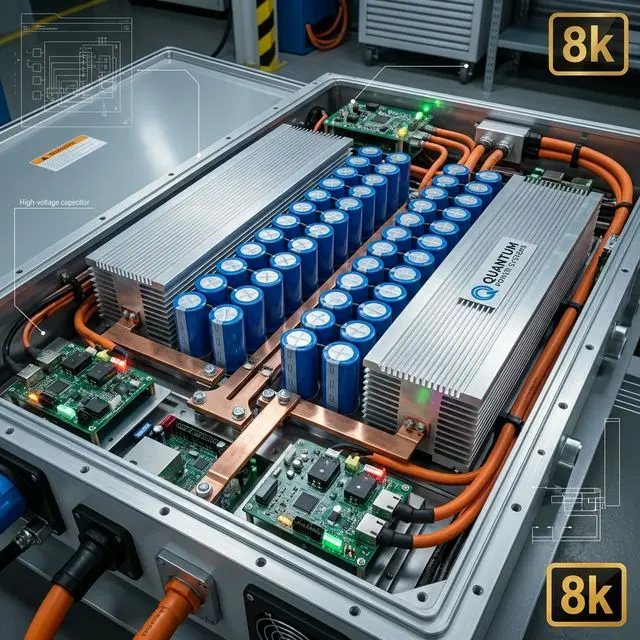
High-Power DC Fast Charger Network
The Challenge
Acoustic noise and thermal runaway in 350kW fast charging power modules under peak load during summer heat.
The Solution
Redesigned output filter with Specap low-ESR anti-resonance film capacitors and custom busbars.
The Result
Achieved 15°C reduction in operating temperature and eliminated audible resonance, allowing 24/7 peak performance.
Level 3 Highway Charging Station PFC Redesign
The Challenge
PFC stage capacitors in 150kW highway charging stations failing prematurely due to thermal cycling stress — chargers experienced 40+ charge sessions per day with ambient temperatures exceeding 45°C in summer, causing capacitor internal temperatures to exceed rated limits.
The Solution
Specap sourced 1000V-rated polypropylene film PFC capacitors with enhanced THB rating and 20% lower ESR than the original components, combined with improved mounting for thermal coupling to the charger cold plate.
The Result
Eliminated PFC capacitor failures across a 200-station highway network over 18 months of operation, improving station uptime from 91% to 99.2% and reducing annual maintenance costs by $340K.